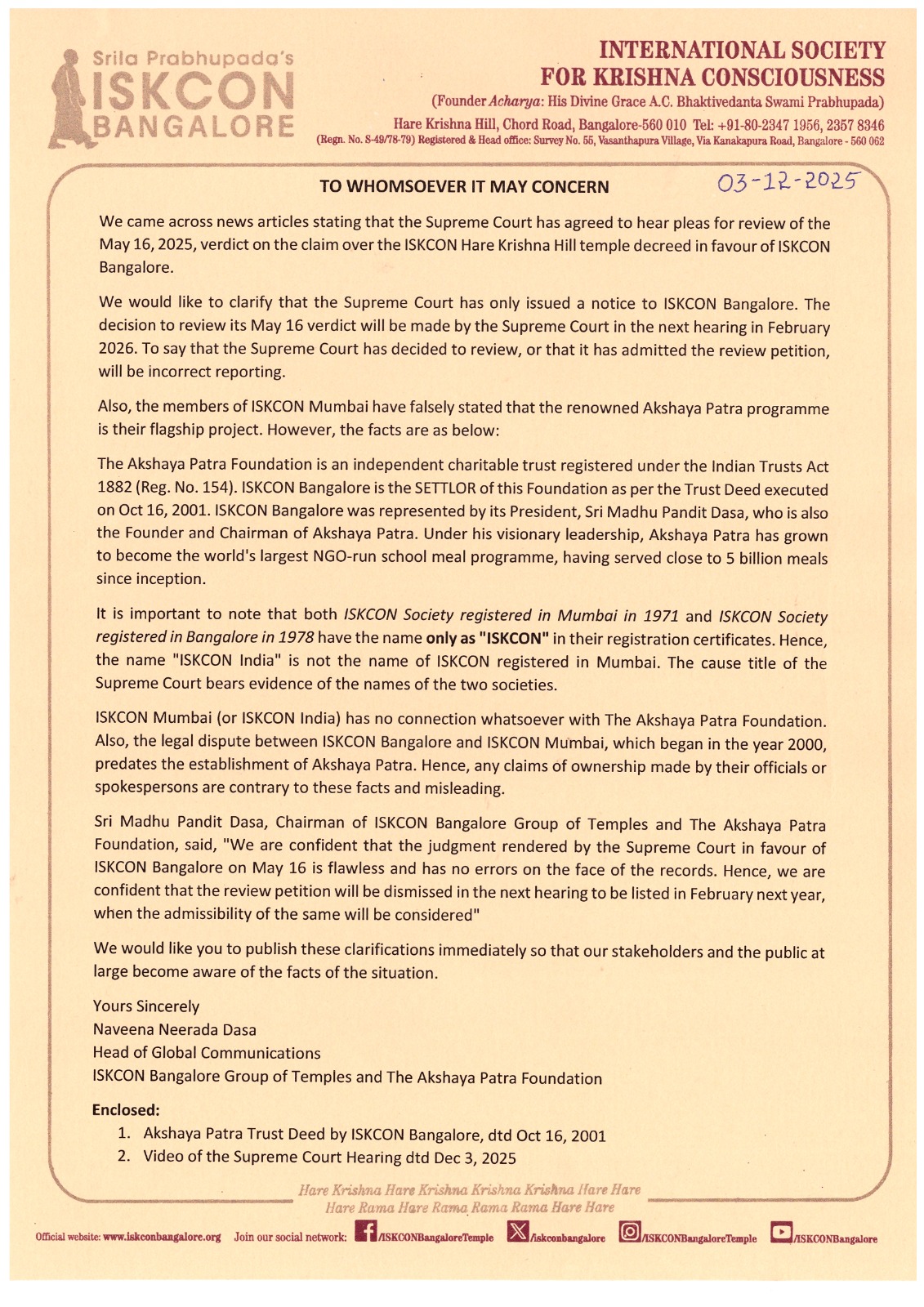
Twenty-five years of litigation over the Hare Krishna Hill temple ended with the Supreme Court’s judgment of May 16, 2025. This page presents the complete factual record — what the Court decided, what it ordered, and what the documents say — with paragraph numbers, so you can verify every line yourself.
The Sri Radha Krishnachandra temple, Hare Krishna Hill, Bengaluru — decreed to ISKCON Bangalore by the Supreme Court of India.
“No error”
The Supreme Court’s finding on the evidence upholding ISKCON Bangalore’s case ¶70
May 16, 2025
The judgment decreeing the Hare Krishna Hill temple to ISKCON Bangalore remains in force today
Three courts
Trial Court (2009) and the Supreme Court (2025) accepted ISKCON Bangalore’s ownership case; every statement here cites the record
01
The earlier orders of the review petition — R.P.(C) No. 2578/2025 in C.A. No. 9313/2014, International Society for Krishna Consciousness, Mumbai v. International Society for Krishna Consciousness, Bangalore & Ors. — reproduced verbatim with the official scans. The order of December 3, 2025 and ISKCON Bangalore’s response are set out in full in section 02, just below.
Transcribed as printed in the Records of Proceedings, including clerical spellings (“Geroge”, “Madhupant Das”, the repeated “and for”).
The review petition, filed under Diary No. 37957/2025, is placed before the Chief Justice, who assigns it to a two-judge bench. A purely administrative step.
Coram · by circulation
The Chief Justice · Justice Augustine George Masih
“Circulate before a Bench comprising Hon’ble Mr. Justice J. K. Maheshwari and Hon’ble Mr. Justice Augustine Geroge Masih.”
The assigned bench takes up the petitions by circulation and defers them. One line.
Coram · by circulation
Justice J.K. Maheshwari · Justice Augustine George Masih
“Circulate the Review Petitions after four weeks.”
The two judges differ. Justice Maheshwari would list the petitions in open court and issue notice. Justice Masih examines the petitions and dismisses them outright — finding no error in the May 16 judgment. Because of the divergence, the petitions go to the Chief Justice of India.
Worth pausing on: Justice Masih — a co-author of the May 16, 2025 judgment — examined the review petitions in full and found “no error apparent on the face of record or any merit” in them.
Coram · by circulation
Justice J.K. Maheshwari · Justice Augustine George Masih
Per Justice J.K. Maheshwari
“1. Delay condoned.
2. Applications for listing the Review Petitions in open Court are allowed.
3. Notice be issued to the parties.”
Per Justice Augustine George Masih
“1. Delay condoned.
2. Applications for oral hearing are rejected.
3. After having carefully gone through the Review Petitions, the Judgment under review and the material annexed therewith, I am satisfied that there is no error apparent on the face of record or any merit in the Review Petitions, warranting reconsideration of the judgment impugned. The Review Petitions are, accordingly, dismissed.
4. Applications for filing fresh documents are declined.
5. Pending application(s), if any, shall stand disposed of.”
Record of proceedings
“1. Delay condoned.
2. In view of the divergent views expressed by the Hon’ble Judges, the review petitions be placed before Hon’ble the Chief Justice of India for directions and to do the needful.”
02
Headlines said the case was “reopened.” Here is everything from that day in one place — the complete order, plain-language notes, and ISKCON Bangalore’s response. The hearing itself is embedded below.
Coram · open court
Justice M.M. Sundresh · Justice Prashant Kumar Mishra · Justice Satish Chandra Sharma
In summary
The Supreme Court has not reopened the case. On December 3, 2025 the Court issued notice on ISKCON Mumbai’s review petition — a routine procedural step — and listed the matter for directions on January 22, 2026, expressly “only for the purpose of ensuring that notices have been served.” It granted no stay, recorded no finding, and decided nothing on the merits; whether the review petition is even maintainable is yet to be considered. The judgment of May 16, 2025, which decreed the Hare Krishna Hill temple to ISKCON Bangalore, remains fully in force today.
The complete order · R.P.(C) No. 2578/2025 · open court
“Applications for listing Review Petitions in open Court and for oral hearing are allowed.
Applications for permission to file additional documents and for and for permission to file fresh documents are allowed.
Issue notice.
Mr. Vikas Singh Jangra, learned AOR accepts notice on behalf of respondent — International Society for Krishna Consciousness, Bangalore and Mr. Kartik Seth, learned counsel accept notice on behalf of respondent — Madhupant Das.
Learned counsel appearing for the petitioner is permitted to serve the remaining respondents through online mode. Dasti, in addition, is permitted.
List the matter on 22.01.2026 at 3.00 P.M. for directions, only for the purpose of ensuring that notices have been served on all the respondents. We further make it clear that on the date to be fixed for hearing, the question of review jurisdiction as well as issues on merits will be heard and considered.
Parties are directed to complete the pleadings within a period of six weeks from the date of service of notice.
Learned counsel appearing for the parties are permitted to file their respective convenience compilation(s).”
The Court issued notice — a procedural step to ensure all parties are informed. It did not set aside, stay, or reconsider anything.
Review jurisdiction is still open — the Court has not yet decided whether the review petition is even maintainable, let alone whether the judgment contains any error.
Review is a narrow remedy — under settled law, a review is confined to errors apparent on the face of the record. It is not a rehearing of the case.
One judge has already found no error — on October 28, 2025, Justice Augustine George Masih, a co-author of the May 16 judgment, examined the review petitions and would have dismissed them, finding “no error apparent on the face of record or any merit.” The split with Justice Maheshwari is why a three-judge bench now hears the matter (full text).
The May 16, 2025 judgment remains fully in force — no stay was granted; the temple stands decreed to ISKCON Bangalore today. All orders in the review petition are published in full text here.
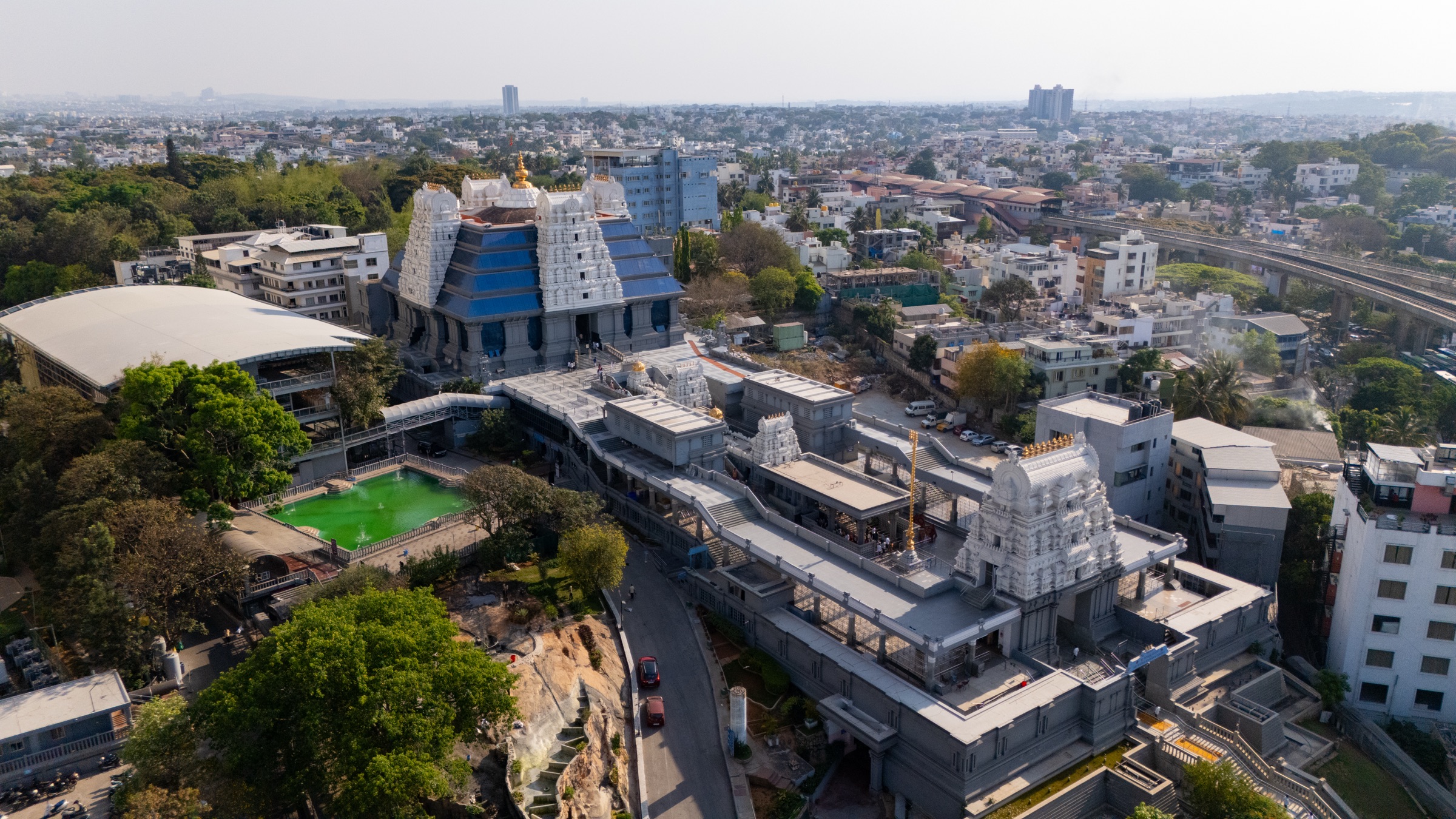
Press release · to whomsoever it may concern · 03.12.2025
“We came across news articles stating that the Supreme Court has agreed to hear pleas for review of the May 16, 2025, verdict on the claim over the ISKCON Hare Krishna Hill temple decreed in favour of ISKCON Bangalore.
We would like to clarify that the Supreme Court has only issued a notice to ISKCON Bangalore. The decision to review its May 16 verdict will be made by the Supreme Court in the next hearing in February 2026. To say that the Supreme Court has decided to review, or that it has admitted the review petition, will be incorrect reporting.
Also, the members of ISKCON Mumbai have falsely stated that the renowned Akshaya Patra programme is their flagship project. However, the facts are as below:
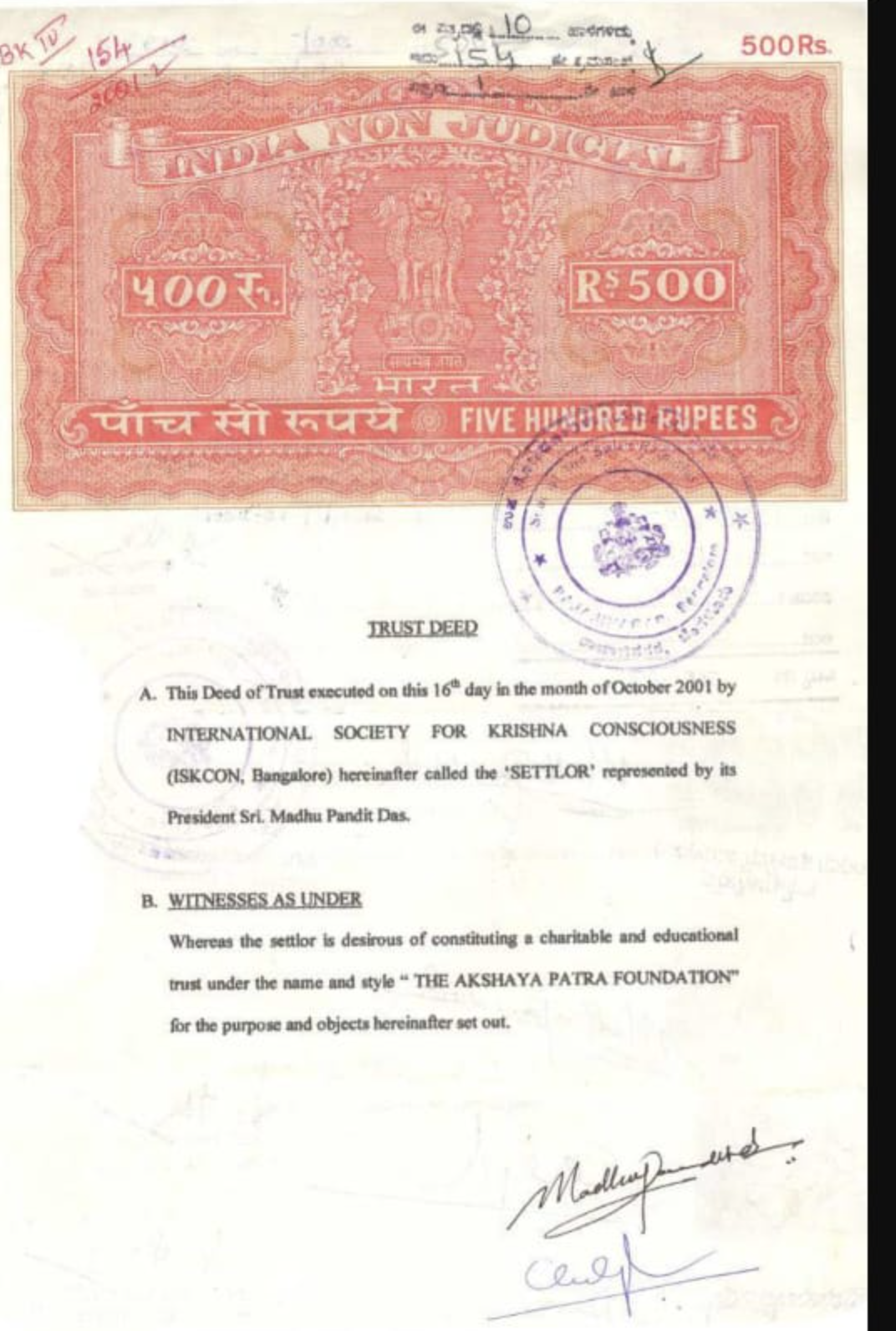
The Akshaya Patra Foundation is an independent charitable trust registered under the Indian Trusts Act 1882 (Reg. No. 154). ISKCON Bangalore is the SETTLOR of this Foundation as per the Trust Deed executed on Oct 16, 2001. ISKCON Bangalore was represented by its President, Sri Madhu Pandit Dasa, who is also the Founder and Chairman of Akshaya Patra. Under his visionary leadership, Akshaya Patra has grown to become the world’s largest NGO-run school meal programme, having served close to 5 billion meals since inception.
It is important to note that both ISKCON Society registered in Mumbai in 1971 and ISKCON Society registered in Bangalore in 1978 have the name only as “ISKCON” in their registration certificates. Hence, the name “ISKCON India” is not the name of ISKCON registered in Mumbai. The cause title of the Supreme Court bears evidence of the names of the two societies.
ISKCON Mumbai (or ISKCON India) has no connection whatsoever with The Akshaya Patra Foundation. Also, the legal dispute between ISKCON Bangalore and ISKCON Mumbai, which began in the year 2000, predates the establishment of Akshaya Patra. Hence, any claims of ownership made by their officials or spokespersons are contrary to these facts and misleading.
Sri Madhu Pandit Dasa, Chairman of ISKCON Bangalore Group of Temples and The Akshaya Patra Foundation, said, “We are confident that the judgment rendered by the Supreme Court in favour of ISKCON Bangalore on May 16 is flawless and has no errors on the face of the records. Hence, we are confident that the review petition will be dismissed in the next hearing to be listed in February next year, when the admissibility of the same will be considered”
We would like you to publish these clarifications immediately so that our stakeholders and the public at large become aware of the facts of the situation.”
Naveena Neerada Dasa · Head of Global Communications
ISKCON Bangalore Group of Temples and The Akshaya Patra Foundation
The December 3, 2025 hearing, in full. Watch it, then compare it with the headlines.
Supreme Court hearing of December 3, 2025 · in full · transcript below
An unofficial transcript of the exchange, prepared from the video above and lightly edited for readability. Speaker attributions are approximate. It is not the court’s record — the order in section 02 is the official record of what was decided; where this transcript and the video differ, the video prevails.
…finding that there was no challenge that a particular application for allotment of the land is manipulated or forged or fabricated — that we never disputed the document.
You have disputed it.
Yes. And therefore, my lords, this honourable court comes to the conclusion that if the application is not disputed and is genuine, then it follows that the sale deed — even though the sale deed by the Bangalore Development Authority is in my favour, though it does not refer to the registration number or the name of the Karnataka society, which is the plaintiff — must also therefore be in their favour. That, my lords, is the substratum, in my respectful submission, of the judgment in this matter. Now, my lords, the second aspect is this. The background becomes relevant here. The division-bench judgment, my lords, heavily relies on the admissions made by the president of this alleged Karnataka society in four suits, my lords, that had been filed before this one in the years 1999 till 2001. In the first, one suit is filed in Bombay by a third party espousing the cause of this gentleman, Shri Madhu Pandit Das, the president of — let’s call it the temple at Bangalore, the Hare Krishna temple in Bangalore. The other three suits are filed by Shri Madhu Pandit Das himself, as the president, and in each of these three suits he admits in so many words — and I will place the averments in just one of them — that he is the president of the Bangalore branch of the defendant society; that in fact the temple, my lords, the land is allotted and the temple built on behalf of the branch; that he is submitting accounts on behalf of this branch to the Bombay society, that is ourselves; and it is undisputed, my lords, that between the formation of the Bangalore branch and the year 2001, all income taxes have been filed by consolidating the accounts of the Bangalore branch into the accounts of the parent society, which is the Bombay society. Thereafter, my lords, what happens here is this: after he files these three suits and tries to get an injunction against the Bombay society — that is the 1971 society formed by Srila Prabhupada himself — after he tries and fails to get an interim injunction to maintain his position as president of the Bangalore branch, he does this complete volte-face, my lords, and says now that there is this independent society. And this society, in fact — and I am not disputing this — was formed in 1978, but after that none of the formalities were observed, is the finding of the division-bench judgment. Now, the more important point which I am coming to is this: as an error apparent on the face of the record, one of the recast points for decision framed by the division bench is what is the effect of these judicial admissions on the case. Despite that, the judgment under review does not make even one reference to these judicial admissions, which is accepted, completely ousted the case…
It becomes a relevant fact.
Yes — of the plaintiff society.
Discussion at the bench of judges.
Kindly respond by issue noticing — but what will you do, we will not give a review.
But the scope of the review jurisdiction is limited.
My lords, no, my lords.
The order of… 47, 14, 14 and 14, we know that. But what we can do — we will hear it, but we will hear it both on merit and review, because we don’t wish to hear it piecemeal. We will give a specific date.
Yes.
We will give a specific date, 2 o’clock…
Yes, my lords.
…sometime in February, we will give a date. You just — we will hear you then.
Yes.
And then we are not deciding any issue now.
Yes. All we wanted was…
…to put the issues on the scope of review and on merit.
Correct.
Yes, scope of review and merit — because actually what is being done is to re-argue; that can’t be done.
No issues. OK. A finding of fact has been wrongly recorded contrary to what is available — then it is a ground for review.
Yes.
There is an issue which came up for conscious consideration before the court under the judgment, which has not been dealt with — and had it been dealt with, the decision would have been different — it is a ground for review.
All these have been dealt with. Yes.
Whether this factor has been dealt with or not, we will point out.
Yes, we will point out.
Then in that process, we don’t want to do it piecemeal, in order to say one thing or the other. Let us have it — at least thrash it out one way or the other. Shall we have a 2 o’clock review, because it is a special bench.
What had happened all these years — it was being managed by a judge, a retired justice, Ravindran. The moment this judgment came, it has gone back to…
But now we can’t put it back again.
I am just saying, therefore, there is an element of this.
OK, OK. That’s it. We don’t want to cause an interim. Then we will give a date in February.
Very well.
We will take it up on Wednesday or Thursday, regular date.
It is better, my lords, than Wednesday. … Yes, my lords.
My lords, may I only suggest — your lordships allow us to serve, by all means…
Yes.
…all the parties…
Yes.
…so that there will be no…
You are appearing for only a few of the parties, is it?
Two parties.
We are appearing for respondent number one and Madhu Pandit Das.
Who is that?
Who is the president, my lord?
Which respondent is he?
He is in the second matter.
Second matter — he is respondent number one.
OK, one second.
I think there may be other parties. There are a number of other parties.
To serve, trustee and… The registrar is directed to complete the pleadings within a period of six weeks.
We will give a convenience compilation.
Yes, a convenience compilation. The third week is fine, for all of you.
OK, my lord.
May I only suggest newspaper publication as well, my lordships?
Unless you serve it and then…
No, the difficulty will be — otherwise you will get adjourned again. Because the parties…
Newspaper publication is an alternative mode of publication.
First let them take an effort.
The bench confers.
My brother said — first let the notice be served, then we will give a date.
Very well.
So then when would my lordships like to put it?
We can keep it in February. In the meanwhile, this service of notice and all can be looked into by the registrar.
May I suggest this, only subject to my lordships’ convenience — your lordships may put it for directions in January.
Okay.
And then my lordships… then only for this purpose. You put your third week of January for directions — only for the purpose of ensuring that notice has been served on all the respondents. This is urgent, to issue notice. And all the parties can file their pleadings in the meantime.
We can take it up on that date, and then thereafter we will get sufficient time.
Very well. Grateful, my lords.
We will further make it clear that on the date to be fixed for hearing — it will be February — there will be jurisdiction over review as well as on the merits of the review.
Most grateful to you, my lordships.
Because only for the case of verifying…
On the lighter side — what Lord Krishna must be thinking about all this.
There have been attempts of mediation. We have made offers. It should be sorted out. It should be. And the society has been functioning very well.
Is it possible to make one attempt through any other judge of this court?
And the Bangalore society has started this Akshaya Patra, and billions of meals have been served, my lords, and huge…
They have taken something that belongs to us — but that’s another matter.
Extraordinary — completely the Bangalore society.
I just have one submission.
On the lighter end — obviously both sides think that nothing belongs to them, and everything belongs to God.
That’s right.
They are trying to achieve consciousness. That’s very unfortunate.
Thank you.
Grateful, my lords.
Appearances as per the record of proceedings: for the petitioners — Mr. S. Prabhakaran, Mr. Kapil Sibal, Mr. Manan Mishra, Mr. Krishnan Venugopal, Sr. Advs. · for the respondents — Mr. C.S. Vaidyanathan, Mr. Rakesh Dwivedi, Mr. Jaideep Gupta, Sr. Advs., Mr. Vikas Singh Jangra, AOR, Mr. Kartik Seth · full appearance list in the order
03
Allegations of forgery, fabrication and fraud against Sri Madhu Pandit Dasa have circulated for years — and were argued before the courts. This is what the courts actually held, allegation by allegation.
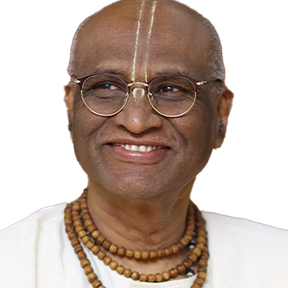
Sri Madhu Pandit Dasa
President, ISKCON Bangalore
Founder-Chairman, The Akshaya Patra Foundation
Padma Shri awardee (2016)
In summary
Every allegation against Sri Madhu Pandit Dasa has failed in court. The charges of forgery, fabrication and manipulation circulated for years — and were argued, fully, before the courts. The Supreme Court found the land record “crystal clear” in ISKCON Bangalore’s favour (¶57), held that the High Court’s findings against individuals “were not warranted at all” (¶58), and quashed the FIR against the ISKCON Bangalore leadership (¶71). No adverse finding against him stands on the record of any court today.
03.01 · Alleged forgery and tampering of land records
The Supreme Court examined the BDA record and found it “crystal clear” in ISKCON Bangalore’s favour: the 1987 allotment application and the 1988 sale deed were in the society’s name, and the words “Bangalore Branch” appear in none of the material documents. No evidence of tampering was found.
¶¶50, 51, 57 · verify
03.02 · Alleged fabrication of the 1984 general body meeting
The certified proceedings and meeting notice were examined by the Trial Court; the challenge “adduced no evidence to prove their case.” The Supreme Court found “no error” in that view. Three courts have accepted the meeting as genuine.
¶¶68–70 · verify
03.03 · Alleged manipulation of records and accounts
The Supreme Court held the High Court’s discussion of alleged manipulations “was not relevant at all,” and drew an adverse inference from the failure of the party alleging manipulation to examine its own material witness.
¶¶46, 57 · verify
03.04 · The High Court’s findings against him
The Supreme Court set the High Court’s judgment aside and held that its findings against various individuals “were not warranted at all.” No adverse finding against Madhu Pandit Dasa stands on the record today.
¶58 · verify
03.05 · The criminal case
The Supreme Court quashed the FIR against the ISKCON Bangalore leadership and declined to proceed with contempt, observing that the dispute “ought not to have been brought to the Court” at all. No criminal proceeding arising from these allegations survives.
¶71 · verify
04
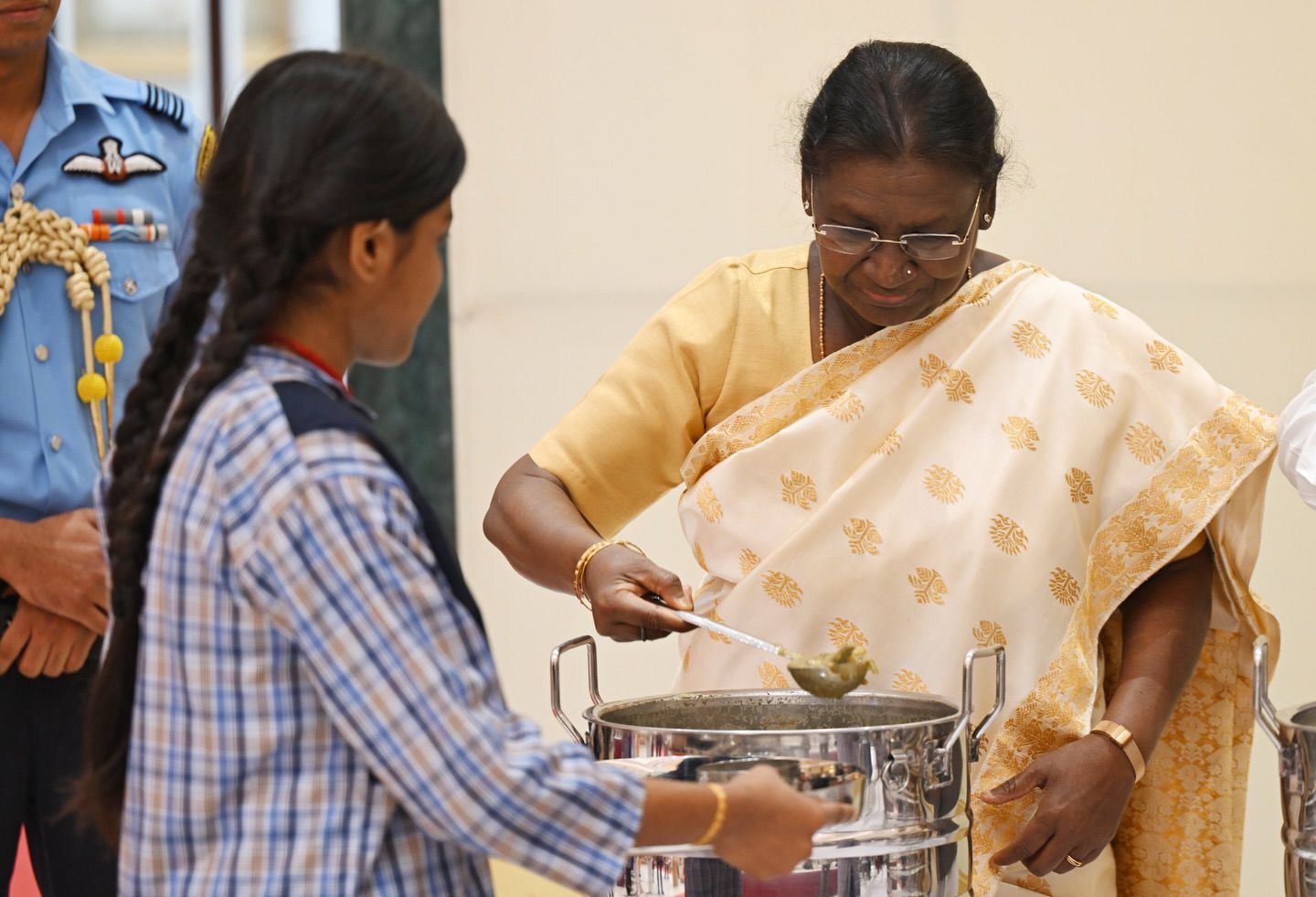
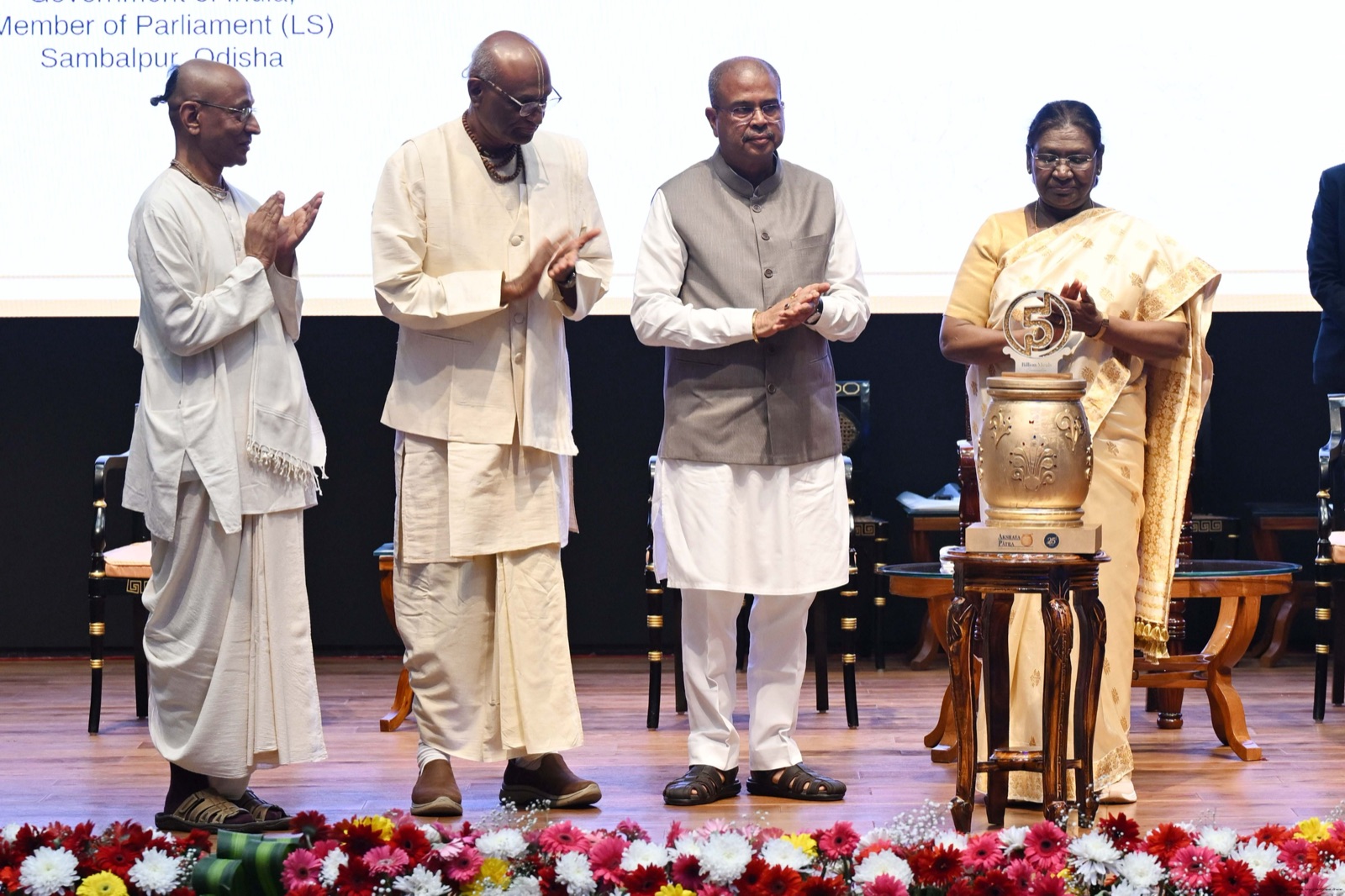
Questions are sometimes raised about who Akshaya Patra belongs to. The founding documents are public, and they answer it plainly. The Akshaya Patra Foundation — the world’s largest NGO-run school meal programme, which has served over five billion meals to schoolchildren across India — was constituted by ISKCON Bangalore in 2001 under the leadership of Sri Madhu Pandit Dasa. The five-billion-meals milestone was commemorated at Rashtrapati Bhavan in the presence of the President of India.
An independent charitable trust registered under the Indian Trusts Act, 1882 (Reg. No. 154).
The Trust Deed of October 16, 2001 names ISKCON Bangalore as the settlor, represented by its President, Sri Madhu Pandit Dasa — Founder and Chairman of the Foundation.
The legal dispute began in 2000 — before Akshaya Patra existed. A dispute cannot threaten what predates it.
The Foundation’s governance is independent of the temple case — and unaffected by it.
Over five billion meals served — the milestone was commemorated at Rashtrapati Bhavan in the presence of the President of India.
In summary
Akshaya Patra was founded from Bangalore, and the founding documents say so. The Akshaya Patra Foundation is an independent charitable trust registered under the Indian Trusts Act, 1882 (Reg. No. 154). Its trust deed of October 16, 2001 names ISKCON Bangalore as settlor, represented by its President, Sri Madhu Pandit Dasa — the Foundation’s Founder-Chairman. The legal dispute began in 2000, before the Foundation existed, and its governance is unaffected by the case. Claims of ownership made by anyone else are contrary to these public documents.
![]()
“We are confident that the judgment rendered by the Supreme Court in favour of ISKCON Bangalore on May 16 is flawless and has no errors on the face of the records. Hence, we are confident that the review petition will be dismissed…”
05
After more than two decades of litigation, a bench of Justice Abhay S. Oka and Justice Augustine George Masih delivered a 56-page judgment (2025 INSC 717). It restored the Trial Court’s 2009 decree — the Hare Krishna Hill temple and properties belong to ISKCON Bangalore, an independent society registered in Karnataka in 1978.
Key findings, in the Court’s words
“…it is crystal clear that Schedule ‘A’ property was allotted by the BDA to ISKCON Bangalore, and ISKCON Bangalore is an independent society registered under the Karnataka Societies Registration Act.”
“In fact, the words ‘Bangalore Branch’ are not found in any of the material documents. On the contrary, all the documents, from the application for allotment to the grant of exemption under the Urban Land Ceiling Act, indicate that the application for allotment was made on behalf of ISKCON Bangalore and that allotment was made to the said Society.”
“Even assuming that ISKCON Bangalore did not possess funds, and even if money came from ISKCON Mumbai, it cannot claim ownership.”
“While going into the question whether the allotment was to ISKCON Mumbai in the name of the Bangalore branch, the High Court has recorded findings against various individuals which were not warranted at all.”
“We may note here that plaintiffs have adduced no evidence to prove their case… After having perused the pleadings and evidence on record, we find no error in the view taken by the Trial Court as well as the High Court.”
The Court also quashed the FIR against the ISKCON Bangalore leadership and declined to proceed with contempt, observing that the dispute “ought not to have been brought to the Court” at all (¶71).
06
Every question the case has raised, answered from the court record and public documents — each with its paragraph number, so nothing here rests on our say-so.
ISKCON Bangalore. The Supreme Court restored the Trial Court’s 2009 decree: the temple and properties belong to ISKCON Bangalore, an independent society registered under the Karnataka Societies Registration Act in 1978 (reg. 49/78-79). The judgment is in force today.
¶57 · verify
The allotment application of February 5, 1987 was made by ISKCON Bangalore, with its Karnataka registration certificate enclosed. The sale deed of August 3, 1988 was executed in favour of ISKCON Bangalore. The Court found the words “Bangalore Branch” in none of the material documents, and no rival application on record.
¶¶47, 50, 51, 54 · verify
Yes, per three courts. The Trial Court examined the certified proceedings (Exh. D-1/D-13) and the meeting notice of May 25, 1984 (Exh. D-9); the challenge produced no evidence. The Supreme Court found “no error” in that view.
¶¶68–70 · verify
The Supreme Court held the High Court’s findings against individuals “were not warranted at all,” found its discussion of alleged manipulations “not relevant at all,” drew an adverse inference from the failure to examine the material witness — and quashed the FIR against the ISKCON Bangalore leadership.
¶¶46, 57, 58, 71 · verify
No. The Court answered directly: “Even assuming that ISKCON Bangalore did not possess funds, and even if money came from ISKCON Mumbai, it cannot claim ownership.”
¶55 · verify
The Akshaya Patra Foundation is an independent charitable trust (Indian Trusts Act, 1882; Reg. No. 154). Its trust deed of October 16, 2001 names ISKCON Bangalore as settlor, represented by its President, Sri Madhu Pandit Dasa — the Foundation’s Founder-Chairman. The legal dispute began in 2000, before Akshaya Patra existed.
Trust deed · 16.10.2001 · view the deed
Yes. Both societies — Mumbai (1971) and Bangalore (1978) — are registered as “International Society for Krishna Consciousness,” as the Supreme Court’s own cause title shows; the Court held ISKCON Bangalore is “an independent society.”
¶57 · verify
07
1978 → today · scroll →
1978
International Society for Krishna Consciousness registered under the Karnataka Societies Registration Act (reg. 49/78-79) — ISKCON Bangalore.
01.07.1984
Annual General Body Meeting of ISKCON Bangalore; new governing body elected — accepted as genuine by three courts.
05.02.1987
ISKCON Bangalore applies to the BDA for allotment of the Hare Krishna Hill land, enclosing its Karnataka registration certificate.
03.08.1988
BDA executes the registered sale deed in favour of ISKCON Bangalore.
1997
The Hare Krishna Hill temple complex is inaugurated.
1999
GBC resolutions 301/302 — Madhu Pandit Dasa and associates deemed “unfit to be members” for advocating the July 9, 1977 directive.
2000–2003
Litigation begins: Suit No. 7934 of 2001 and Suit No. 1758 of 2003.
17.04.2009
City Civil Court, Bangalore decrees the suit: properties owned by ISKCON Bangalore.
2011
Karnataka High Court reverses (RFA 421/2009).
16.05.2025
Supreme Court (2025 INSC 717) sets aside the High Court judgment and restores the 2009 decree. Temple belongs to ISKCON Bangalore. FIR quashed.
28.10.2025
Split verdict on the review plea: Justice Maheshwari would issue notice; Justice Masih finds “no error apparent on the face of record” and dismisses. Referred to the Chief Justice of India (full text).
03.12.2025
Three-judge bench issues notice; matter listed January 22, 2026 “only for the purpose of ensuring that notices have been served.”
22.01.2026
Matter listed for directions, per the December 3 order, “only for the purpose of ensuring that notices have been served.”
Today
The May 16, 2025 judgment remains in force. This section is updated after every hearing.
08
Every source cited on this page, in one place. Read them, watch them, verify for yourself.
09
Short answers, each grounded in the record above.
ISKCON Bangalore. On May 16, 2025 the Supreme Court of India restored the Trial Court’s 2009 decree: the temple and its properties belong to ISKCON Bangalore, an independent society registered under the Karnataka Societies Registration Act in 1978 (Reg. 49/78-79). The Court called the position “crystal clear” (¶57). That judgment is in force today.
In a 56-page judgment (2025 INSC 717), a bench of Justice Abhay S. Oka and Justice Augustine George Masih set aside the Karnataka High Court’s 2011 judgment, restored the Trial Court’s 2009 decree in ISKCON Bangalore’s favour, held the BDA allotment record “crystal clear” (¶57), held that the High Court’s findings against individuals “were not warranted at all” (¶58), and quashed the FIR against the ISKCON Bangalore leadership (¶71). The full judgment is on this page.
The Supreme Court quashed the FIR and declined to proceed with contempt, observing that the dispute “ought not to have been brought to the Court” at all (¶71). No criminal proceeding arising from these allegations survives.
No. On December 3, 2025 it issued notice on the review petition and listed the matter for directions — expressly “only for the purpose of ensuring that notices have been served.” Whether the review is even maintainable has not been decided. The May 16, 2025 judgment remains in force. The full order is reproduced in the record, in full text.
A narrow remedy in which the Supreme Court may correct an error apparent on the face of the record in its own judgment. It is not an appeal and not a rehearing — the case is not argued afresh. Review petitions are heard by the same court that delivered the judgment, and the vast majority are dismissed.
No. Issuing notice is a procedural step that allows the other side to be heard. It carries no finding, no stay, and no observation on the merits. The Court itself made clear that the question of review jurisdiction is yet to be heard and considered.
No. A stay application was filed along with the review petition (IA No. 192222/2025), and no stay has been granted. The December 3, 2025 order issued notice and fixed a date for directions — nothing more. The decree in ISKCON Bangalore’s favour continues to operate in full.
Yes. On October 28, 2025, Justice Augustine George Masih — a co-author of the May 16 judgment — recorded that after carefully going through the petitions and the judgment under review, “there is no error apparent on the face of record or any merit in the Review Petitions,” and would have dismissed them. Justice J.K. Maheshwari preferred to issue notice and hear the matter in open court; that divergence is why the petitions went to the Chief Justice of India and now stand before a three-judge bench. Both orders are reproduced in full text.
A directions hearing — in the Court’s own words, listed “only for the purpose of ensuring that notices have been served on all the respondents.” The substantive hearing comes later: the Court has made clear that on the date fixed for hearing, “the question of review jurisdiction as well as issues on merits will be heard and considered.”
No court has found so. The Supreme Court examined the BDA record itself: the allotment application of February 5, 1987 was made by ISKCON Bangalore with its Karnataka registration certificate enclosed, the sale deed of August 3, 1988 was executed in its favour, and the words “Bangalore Branch” appear in none of the material documents (¶¶47–51). The Court called the position “crystal clear” (¶57).
Three courts accepted it as genuine. The Trial Court examined the certified proceedings (Exh. D-1/D-13) and the meeting notice of May 25, 1984 (Exh. D-9); those who challenged it “adduced no evidence to prove their case”; and the Supreme Court found “no error” in that view (¶¶68–70).
The Supreme Court answered this directly: “Even assuming that ISKCON Bangalore did not possess funds, and even if money came from ISKCON Mumbai, it cannot claim ownership” (¶55). Ownership follows the registered record, not a funding claim.
No. The Supreme Court held it is “crystal clear” that ISKCON Bangalore is an independent society registered under the Karnataka Societies Registration Act in 1978, and that the Hare Krishna Hill property was allotted by the BDA to ISKCON Bangalore (¶57). The Bangalore property was never registered with the Charity Commissioner as ISKCON Mumbai’s (¶¶47, 54).
The registered name of both societies — Mumbai (1971) and Bangalore (1978) — is “International Society for Krishna Consciousness,” as the Supreme Court’s own cause title shows. “ISKCON India” is not the registered name of either society. ISKCON Bangalore’s press release of December 3, 2025 sets this out, and the cause title of every order on this page bears it out.
President of ISKCON Bangalore, Founder-Chairman of The Akshaya Patra Foundation, and a Padma Shri awardee (2016). Allegations made against him over the years were argued before the courts — and the Supreme Court held the High Court’s findings against individuals “were not warranted at all” (¶58), found the land record “crystal clear” in ISKCON Bangalore’s favour (¶57), and quashed the FIR (¶71). No adverse finding against him stands on the record today. Section 03 above takes the allegations one by one.
The Akshaya Patra Foundation is an independent charitable trust registered under the Indian Trusts Act, 1882 (Reg. No. 154). Its trust deed of October 16, 2001 names ISKCON Bangalore as settlor, represented by its President, Sri Madhu Pandit Dasa — the Foundation’s Founder-Chairman. The first page of the deed is published on this page.
No. The legal dispute began in 2000 — before Akshaya Patra existed. The Foundation is an independent trust whose governance is unaffected by the case. It has served over five billion meals to schoolchildren across India, a milestone commemorated at Rashtrapati Bhavan in the presence of the President of India.
Everything cited on this page is published here: the 56-page Supreme Court judgment (PDF), all four orders passed in the review petition in full text with official scans, ISKCON Bangalore’s press release of December 3, 2025 in full text with the letterhead scan, the first page of the Akshaya Patra trust deed, and the video of the December 3 hearing. See Documents and The review petition, order by order.